Blog

Nothing Else Matters- The Gift of RIE


It’s one of the hardest things I’ve ever done, and I didn’t choose it so much as it chose me. All I had to do was say yes.  It’s like looking into a mirror. There’s no arguing with the reflection. It’s just what is… Reflected back is the good, the bad, the ugly. Do I have the strength to face it, and accept it for what it is? We’re going to find out. My past, my present, my future, who I am, where I’ve been, where I am, where I still need to grow… it’s all there. For thirty years, I’ve lived far from my family and forged my own path. Now I’ve returned to them to care for my new baby niece. There’s no taking the baby and running. I am here for the foreseeable future, and I recognize that if I am going to be a good caregiver to R., I need to continue to face and understand myself and my family dynamics.
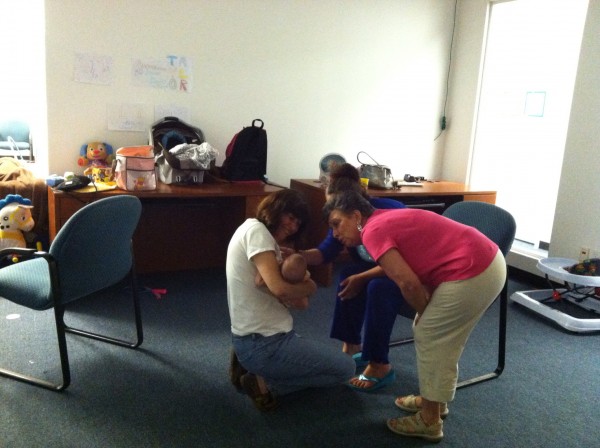
At this point in time, R. remains in the care of foster parents. My family and I are allowed a one hour supervised visit with her each week at a service center in Delray Beach. In between, we can’t see R., nor are we given much information about her care or her daily life. We keep ourselves busy and occupied by preparing for the day (hopefully, soon) when she will be with us on a full time basis. This preparation  has included the “normal”, happy things like setting up R.’s room, shopping for clothing and baby care supplies, and road testing strollers, but it has also included submitting to background checks, fingerprinting, and a home study- which is a two and a half hour long process which involves having your home environment evaluated for safety and suitability for a child, handing over your financial records, being grilled by a social worker regarding your motivations, and probing into every aspect of your personal (from birth on) and professional life, including your childcare philosophy and experiences. The social worker then writes a report, which must be reviewed, approved and signed off on by her supervisor and her supervisor above her, before a lawyer can write a request for a “transfer of care”, which must then be approved by a judge.

I feel as if I am in limbo- neither here nor there. This week has included times of frustration, extreme sadness and longing for home and the people at home, a close and unwelcome encounter with a rat, and a bout of the stomach flu.

It has been a difficult and challenging week on so many levels, but I am not alone and without support. I have been buoyed by a constant outpouring of listening, love, prayers, calls, and encouraging messages from far away friends and family, as well as unexpected kindnesses from complete strangers, and people I have never met, but only know through facebook. I have discovered one of the greatest gifts and comforts is something that is within me, something  I carry with me- my understanding and practice of RIE,  not just as it applies to babies, but to all of those around me. Let me try to explain.

I will soon be R.’s primary caregiver, but for right now, she is in the care of others, and once she is with me, we will initially be living with my mother and my step-dad. I will continue to receive monthly visits from a social worker, and of course, I will do everything in my power to support R.’s parents (my brother and his girlfriend) to continue to develop their relationship with her. There is a lot of love surrounding R., and although I will be her primary caregiver, clearly I am not in “control”, and I must accept that while I have my preferences and particular ways of doing things and being with her, others may not share the same ways of thinking, acting, being, or doing.

So often, when I’m counseling parents or mentoring students new to RIE, I am asked the question. “How do I help others understand?” I hear anguished stories from mothers and caregivers who are struggling because others don’t understand, or their ways of interacting are different, and not respectful. Magda Gerber’s counsel was simple:  “Don’t stress – let others develop relationships with the infant/child in their own way.” Janet Lansbury elaborates in her post Dealing With Parenting Differences Among Friends, Family, and Kind Strangers:

“Don’t say anything.”  AND  “Do model. It is easiest to appreciate a parenting style when we see an organic, spontaneous demonstration. Be a positive model of respectful care. You’ll be surprised how much others notice, if they are even a little bit open-minded.  Strangers have approached me to say how much they enjoyed watching me interact with my toddler. The majority of RIE Parent/Infant Guidance Class referrals come from people who have admired their friends’ children, or the quality of the relationship they have with them.”

I recognize that this advice is easier to give than it is to practice. I am embarrassed to admit that when I was a new student of RIE, I struggled mightily with this advice. After having my eyes opened to a different way of being with and caring for babies, I wanted everyone to “get it” the way I thought I did. I harbored a lot of judgement and criticism towards those who didn’t understand or know about the “right way” to respect babies. Early on, after having participated in one of my first RIE Parent/Infant Guidance Classes as a demonstrator, as I talked with Magda, I blurted out that I thought the classes would be much more enjoyable and beneficial for the babies, if only the babies didn’t come with their parents. “The babies “get it”, their parents don’t.” (Forgive me, I was young, and knew not what I was saying.)

In her typical wise, gentle fashion, Magda laughed, and said, “Lisa, try to be patient with them- and with yourself. Just keep doing what you are doing, and you will see- they will get it, and so will you.” It’s taken me all of fifteen years of practice to realize the complete wisdom of those words, and of Magda’s message to me, but I humbly report that I am coming closer and closer to understanding…

Respecting babies means accepting that others may or may not interact with them in the way I’d like. Preaching, teaching, judging, and criticizing won’t help another person to understand or to change, but my quiet, peaceful modeling, and the relationship I develop with R. will make a difference to her, and to me, and nothing else matters.

Magda advocated not just for respect and trust for babies and their process, she advocated for “respect for all people.” She believed, “Having respect for the world is when you allow people to be what they are.” I am “getting it”, and because of that, I can relax, allow others to develop their own relationship with R., and not feel that I have to try to control them.

I am realizing more and more that RIE is not just something I “do” with children, but it has become a part of me, a part of who I am, not just with babies but with all the people in my life (although I admit- it is still much easier for me to practice with babies than with adults- but I’m getting there!). Yesterday, we had a visit with R. There was some kind of audit going on at the service center, and the place was swarming with people. Phones were ringing, doors were slamming, people were talking loudly, and we were relocated into a small, cramped office (instead of the play room) for our visit. R. was very aware of the changes, and it wasn’t the easiest visit. A well meaning person turned on the bright overhead lights in the office we were in, even before she asked if we wanted/needed them, then she turned them off, and on again, for no apparent reason. R. arrived hungry, and was having lots of gas and cramps, and we had to change her on a desk top next to a computer screen and keyboard.

R. was a trooper through most of it, smiling and cooing, but after she was fed and changed, she started crying, and I could see she wanted to go back to sleep. This is the kind of situation that would have thrown me, in the past. I would have become anxious, and critical of everyone around me, and I would no doubt have passed that feeling of anxiety to R.

But yesterday, I did not become anxious. I stayed very focused on R., and very calm. I moved slowly. I talked slowly, and I stayed connected to R., and it created this kind of bubble of safety and peace around us, despite the circumstances. It was like everything and everyone else dropped away. My mother was feeling anxious, but I didn’t engage in a struggle with my mother or try to stop her from being who she is, or doing what she does. I just slowly undid R.’s car seat buckles while talking quietly with her. When she was crying and all the noise and commotion was going on, I quietly held her, and acknowledged that I saw she wanted to sleep. I told her she was safe. When she startled, I acknowledged- “You heard the door slam. There are a lot of loud noises here today.” She fell asleep in my arms with a deep sigh. And then it was time to say goodbye to her again for another week.

I maintained a peaceful space inside myself, and R. responded to this. It’s so difficult to put this into words, but I wanted to try, because it’s truly a miracle. I am understanding the beauty and the gift of RIE and how it works, on an ever deeper level, as I continue to practice and live it. THIS is why it is so hard to “teach” RIE or write about it. It really can’t be conveyed so easily in words, and it really does come from practicing it and making mistakes, coming back to mindfulness and paying attention, and trying again and again to make the connection with the baby. It’s not about anyone else or what they do or say, it’s about who I am, and how I relate to R., and the relationship we are developing, and nothing else matters.There’s room to allow others to have their relationship with R., too.

‘Holding’ Her Through the Tears


“There is a kind of ‘holding’ we can do as mothers and caretakers that takes place in our hearts and minds; we can create an atmosphere for the child that is filled with the warmth and protection they need. When my son is out on his own in the space around me, I am always ‘holding’ him with me; in the way I move and the songs I sing and even in my quiet meditative thoughts (when I can keep them calm and tame that is).” Sydney Steiner , Learning Motherhood

When I read these words today, I thought of this:

Untitled


It’s the first time…the first time I’m meeting her, the first time I’m holding her, the first time I’m feeding her, and now, the first time I’m changing her diaper. She isn’t even a month old yet, and she is so incredibly tiny. We only have an hour together. She is awake and aware, even though she keeps her eyes closed tight against the bright, overhead, florescent lights of the playroom we are in. She’s been cuddled in my arms for about a half an hour, and she’s eaten, and it’s pretty clear that she needs a diaper change. The circumstances are less than ideal.

There is no changing table, so I place her on a blanket on the couch. My mother is hovering over my shoulder, and a social worker is present watching my every move and taking notes. She begins to cry as soon as I put her down and start undressing her, her face turning bright red, contorting and scrunching up, her arms flailing, and her legs kicking. Whoever invented the term “non-mobile” baby, had no clue. I feel tense. I am supposed to be the “expert”, and yet…

Her wails are so loud, and plaintive- “I don’t like this!!!”  I briefly wonder if there is a way to change her while still holding her. “Breathe, Lisa,” I tell myself. Then I enter a quiet, focused space within, and bring my full attention to her in the moment. Everybody and everything else ceases to exist. “We will get through this together.” I resist the urge to hurry through the diaper change, and quietly talk to her, remembering to tell her what I am going to do before I do it. She continues to cry and flail. She kicks off a sock. She screams louder as I wipe the tender, reddened skin on her bottom, and apply the diaper cream that the social worker hands to me. She urinates just as I am going to fasten the new diaper into place. Almost done. “Breathe.”

I finish, and lift her into my arms, one sock still off. My mother brings her sock and tries to put it back on just as she is calming down and settling comfortably back into my arms. “Give us a minute, Mom. Let her get settled, first.” It was the longest five minutes of my life. But we did it, together, and the world didn’t end, and the next time will be easier….or not, but my commitment remains to hold the calm space for her, to slow down, to talk her through it, and be with her in it, even if I can’t physically hold her through every minute of it. “Breathe.” And so our relationship begins.

Choosing Childcare For Infants and Toddlers- Essential Considerations


In the day-to-day give and take of good infant/toddler child care, children and their caregivers relate in a way that looks much like a dance, with the child leading, the caregiver picking up the rhythm and following. When a caregiver reads and responds to the young child’s messages with sensitivity, the child’s hunger to be understood is satisfied. The conviction that “I am someone who is paid attention to” becomes part of the infant or toddler’s identity. Doctor J. Ronald Lally

It’s a wonder I haven’t tackled the topic of what to consider when choosing childcare for infants and toddlers before because it’s one parents often ask me about. Part of the reason I tend to shy away from this subject is that I have a bias against center-based or group childcare for children under the age of three, partly because I know firsthand how woefully inadequate many programs are at truly meeting the unique needs of babies and toddlers.

  baby bentrup

As Doctor Ronald Lally of the Program For Infant Toddler Care says, “Simply put, a preschooler has already formed a pretty solid sense of identity, with definite likes, dislikes, inclinations, and attitudes, but an infant or toddler is forming his or her sense of identity. Part of what the infant gets from the caregiver is a sense of who that caregiver is; this sense is incorporated into the infant’s definition of self. The process of forming a strong positive identity should occur in a setting that offers security, protection, and intimacy. It doesn’t happen in “school”; it happens in a continuing relationship with a caregiver.”

I understand it isn’t a possibility for many families, whether due to personal choice, family structure, or financial considerations, to stay home with their babies, and/or to hire a nanny to provide in-home care until they are three years of age or so. If a family chooses or requires care outside of the home, I encourage parents to consider small home-based family childcare centers, as well as larger centers. Little River School Online wrote a very informative and helpful post describing the different options parents have when it comes to choosing childcare, outlining some of the pros and cons of the different choices, that you may want to take a look at Finding The Right Child Care Fit. Ultimately, it’s not the type of care that is as important, as it is the quality of care.

In a chapter of Your Self Confident Baby entitled How to Select the Right Child Care, Magda Gerber wrote, “Parents have often asked me if it is detrimental for a child brought up following RIE philosophy to be in a child care situation that doesn’t follow it. Not necessarily. I strongly believe good is good. Finding a kind, gentle person who pays attention to your child is the important thing. Honesty is a good quality too.”

The components that I consider essential to quality center-based infant toddler care include the following:

1) Number one, and most important in my book, is looking for caregivers or teachers who are patient, kind, good observers and listeners, and who seem to enjoy being with babies and toddlers. A professional caregiver or teacher will possibly hold a degree in early childhood development or education, and at the very least, will actively pursue ongoing personal learning and professional development opportunities. 

2) Next is primary caregiving (defined as one or two special people who care for and know your child well); and small group size. How small? Ideally,  there will be one caregiver for every three babies 15 months and younger, with a total group size of no more than eight (I prefer 6.), and one caregiver for every four toddlers 15 months to three years of age with a total group size of no more than twelve. (I prefer eight.)

3) Continuity of care is also important. This means the same caregiver(s) care for your child throughout their time at the center. There should be a predictable but flexible routine that allows for responsive and individualized care, and the environment should allow for and encourage lots of free play and exploration, choice, and autonomy, indoors and out.

4) I wish that I didn’t even have to include this next statement, but observation and experience make it necessary: Direct teaching, academics, and screen technology of any kind should have no place at all in childcare settings for babies and toddlers. Magda Gerber talked about the importance of “caregiving as the curriculum” meaning that for babies and toddlers, everything about their day is a learning opportunity. Teachers should follow the baby’s lead and meet individual needs during diapering, feeding, and sleeping times. Schedules should be flexible to accommodate individual preferences. Babies and toddlers don’t need a planned curriculum, they need responsive, attentive caregivers, who take the time to build relationships, provide predictable routines, and allow them to explore freely. 

So, how to gauge if a particular center or setting is the right one for you and your child?

1) Start by defining what is most important to you, and ask friends and other parents to share their recommendations and experiences. Take a look at these guides from the National Association For The Education of Young Children that give tips on what to look for in a quality infant or toddler program.

2) Do an online search to find local centers, and spend some time looking at their websites. Your local resource and referral center may be a good place to start.

3) Don’t skip this step! Call and visit each center you are considering, and spend time observing the teachers who will care for your child. If possible, visit at least once on your own and then again with your child. Ask lots of questions (mostly of the director, as teachers will be focused on the children in their care).

4) Most importantly, pay attention to your gut reactions as you observe, because if it doesn’t “feel right” to you for any reason, it probably isn’t! 

Beyond basic health and safety considerations, here are some things other parents have said were important to them:

“Enough time to accompany your child in the transition time. Enough outdoor time regardless of the weather. In the end, you must like it and trust the teachers, so your child can feel safe and happy there.”

“I know that I am looking for the following qualities: a “non-academic” play-based place, staffed by caring, positive-minded, joyful people who aim to raise kids with intrinsic motivation and who don’t “Good job!” everything to death. People who believe in firm, clear boundaries and who don’t socialize kids to perform and to please. Most importantly, people who believe that there is no right or wrong way to play. A no-media environment, healthy organic foods, outdoor space, and use of non-toxic home products and cleaning materials and I would be one very, very happy lady! I am finding that these things are not exactly easy to find!”

“Outdoor space and an absence of flashcards, or drill-kill-type activities would be wonderful, too. I would also look for a place that has routines and structures in place with plenty of time for free exploration and play during the day. Racial and cultural diversity is also important. Perhaps I am too selective?” (Not at all!)

“I would say to look for rooms that are set up to encourage independent exploration. Look for teachers who are not hovering, yet are available, helpful, and compassionate”

“Look for a place that will let you sit in a corner and observe – it’s the little parts of the day that make the whole. Look for respect in how the teachers treat the children, listen to how they speak to them, and watch for lots of creative, open-ended play. Make sure to ask the staff what they believe about children – their answers will speak volumes!”

“Good ratios (number of adults per child), experienced respectful teachers, lots of open-ended play objects, daily outdoor time, hands-on activities offered daily. Trust your gut. If it doesn’t feel right it probably isn’t right for you.”

“Priority on time outside in all weather, gender non-specific toys, lack of branded toys, plenty of books in good shape. Clean, welcoming space that your child finds inviting and understands. Caregivers who care for themselves, communicate clearly. A routine (not necessarily a schedule) that allows for both structured and unstructured time. Consistent adults with current vaccinations and background checks. Healthy food, shared in community. Clear professional policies.”

A good center will be licensed and may be accredited by the National Association for The Education of Young Children  (NAEYC) or another accrediting organization (although this alone does not guarantee quality), will have a clear, written philosophy of care, an open door policy (meaning parents are welcome and encouraged to visit and observe at any time), and will strive for, and put a priority on open daily written and verbal communication between caregiver/center and home.

Many quality programs include a parent education and support component which may include daily or weekly notes and/or observations regarding your child, monthly newsletters, a lending library, monthly parent meetings, social gatherings such as potlucks or community work days, monthly adult-only meetings on “hot” parenting topics, parent/infant classes, home visits from teachers, meetings with teachers and/or directors to discuss a child’s development and progress and answer parent questions, a parent handbook, a Facebook page or website with a blog and/or community board, and more. There must be two-way communication between the family and caregiver/center. Quality programs will offer their teachers and staff ongoing professional education and support opportunities, as well.

The books Your Self Confident Baby, and One, Two, Three The Toddler Years both have chapters that distill the most important tips and considerations for parents searching for the right care for their baby or toddler. It’s not an easy task, but it is possible to find care for your baby that feels good and works for your family, and it’s worth it to start early and do your research to find the best fit.


One last note: I strongly urge parents, teachers, caregivers, or anyone who cares about infants and toddlers to become an advocate for quality family services, policies, and childcare. All families and all babies and toddlers deserve access to quality and affordable services and support. An easy way to become informed and active is to join a group such as For Our Babies, which is a nonprofit organization started by Ronald Lally and Peter Mangione which advocates for quality childcare and:

1) Prenatal health care coverage for all families, regardless of income, including home-based support and counseling during pregnancy.

2) Affordable intervention services for at-risk pregnancies.

3) Paid leave for parents for the first nine months of their child’s life.

4) Affordable visits to the homes of all newborns for the first two years that include guidance by professionals trained in parenting and healthy development, along with counseling on early emotional, social, intellectual, linguistic, and perceptual/motor development.

5) Affordable developmental screenings to identify physical and behavioral needs, with referral to affordable help when needed.

6) Affordable services for children with identified special needs.

Check it out today!

I hope that this post will be helpful to you in thinking about your options, and defining what is most important when choosing care for your baby or toddler. Further, I invite you to share your questions, experiences, and tips with others if you’ve been through this process in the comment section below.


One Particular Baby


“If today were the last day of my life, would I want to do what I am about to do today?” -Steve Jobs, Stanford commencement address 2005. (My answer is, “Yes, I would!”)

Right now, there are no words that come easily, and I’m no poet, so all I have to offer is unvarnished, straightforward, and honest facts. I’ve struggled with what (if anything) to say on this blog about recent changes in my life, but so many of you have opened your hearts, trusted me, and shared your most tender feelings, questions, and fears, I feel it’s important for me to return the favor.

Three weeks ago, the phone rang. From across the country, my aunt shared news that would turn my world upside down- my brother and my Dad both weathering serious health crises, and my brother and his girlfriend were expecting a baby, due August 7.

Little R. came into this world a bit earlier than expected, on July 22. A new life, precious and vulnerable. Because her parents were unable to assume caring for her, she was placed with a foster family under an emergency order. A week of sleepless nights, and countless phone calls and conversations later, I found myself on a plane to visit both my brother and my Dad, with no clear answers, and only a hope of actually being able to meet R.

Meeting My New Niece For The First Time


Miracle of miracles, I was able  to spend three hours with R. over the course of two visits in the week that I was in the state that I once upon a time (a lifetime ago) called my home. My brother and his girlfriend expressed a desire to have me assume R.’s foster care, and although the decision is ultimately up to the courts, I immediately realized that this was a request I could not and would not refuse- however, my husband was just as clear that this was a situation that he could not accept.

There are times in life when none of the choices are easy or ideal, and we are called upon to step up and live into our values and ideals even if it is hard and involves personal sacrifice. In this case, my course of action is clear, given who I am and what I believe in when it comes to babies and families in general, and this particular baby, who is a part of my family, and who is in need. This post, called Faithfulness, by Vanessa Kohlhaas, has been a source of inspiration, comfort, and food for thought in recent days.

“Our faithfulness is continuously tested.  We do not get to be in relationship with others in a vacuum – and why would we want to.  We are challenged in our relationships to change, develop and grow.  And through this work we allow our love to deepen and grow with us.” Vanessa Kohlhaas

I am in the process of doing what I must do to prepare to move to Florida for the time being, to support my family and see them through to the other side of this crisis.There is sadness and loss, but there is also joy, and the promise of new beginnings, as I step into the unknown and say goodbye to the family I have loved and cared for for six years, and the community, friends, and life that I have built here in Santa Cruz, over the past three and a half years. It also means letting go of the wedding celebration Bence and I had been planning, and putting aside plans to grow Regarding Baby in new ways- at least for the time being.

There are more unknowns and unanswered questions than there are sureties right now, but if I’ve learned anything in the (almost) forty nine years I’ve been alive, I’ve learned that change is the only constant in life, and I need to just keep showing up with love, while trusting and following my heart where it leads me, even if it’s not where I planned on going. It’s a bit of a bumpy ride right now, but I am being carried by the outpouring of love and support from friends and family both near and far.

I will continue to write this blog, and I will continue to provide phone consultations, (and who knows?), maybe I will bring RIE parenting classes to South Florida. I’m sure I will have much to share with all of you as I navigate night time feedings and wakings, assuming I’m not too bleary eyed to write at all!

For those of you who have asked how you can help, at this time what I most need is help to find a good home for my beloved kitty Pandera. I’m not able to take her with me, and while that is heartbreaking, my mind will be much more at ease if I can find her a loving home. Pandera is a beautiful, healthy, intelligent, curious, and most of all, gentle soul, who loves nothing better than to curl up on your lap and purr. She is good company, and a talker. She must be an only cat, and she must be an indoor cat, but she does well with dogs and children. She is about four years old, and is a silver tipped Bengal. I’d appreciate any help or leads in finding her a good home. You can comment here, call me (831-296-2229), email me (lisa at regardingbaby dot org), or find me on facebook.


Your Baby Has Decided Something Already ~ Can you see?

R+January+2013+009

they say that the beginning
is marked by birth

never mind what you were doing for ten long months
tucked inside your mother’s core

they want to swaddle you, pass you, restrain you, decide for you
but it was you who decided something already

this morning you looked at a ray of sun

illuminating your own hand

there were no flashcards, no claps of approval
to choreograph this relationship with light

in a few months, a rattle will be used
you will be asked to smile, to coo, to say hello
“Good job, Henry!” “Good boy, Henry!” Good boy!”

is this when we begin to live life for others?
does it begin with a name? a certificate? a swaddle?
does it begin with the toy shoved in the palm of a hand
underneath the morning light? ~ Leyla Momeny

Leyla, who is a public school teacher in San Francisco, penned this poem while waiting at the airport for her flight home after completing the RIE Foundations Summer Intensive Course in Los Angeles. I’m thrilled to be able to share her thoughts with you. This is the first in what I hope will be a series of reflections from parents, care-givers, students and others who are putting Magda Gerber’s RIE philosophy into practice in “real life.” My hope is that by sharing the voices and experiences of a diverse group, we can illuminate ways in which respectful care-giving can benefit babies and adults, and strengthen families. What does respectful care look and sound like? What are the challenges, the questions, the joys, of caring for or parenting babies and toddlers in this way?

Leyla says, “I discovered RIE when my daughter was seventeen months old. It was a wonderful discovery and incredibly thought-provoking and trans-formative. I like to think that my girl has experienced the benefits of RIE, even at a “late” start. It is such a powerful framework for parenting and I can’t think of anything as beautiful and respectful as Magda Gerber’s notion of “wants nothing” time.”


“Be careful what you teach the child, you may interfere with what he is learning. Once, many years ago, I saw a child lying on the floor trying to catch something in a very dreamy, beautiful way.  I did not see anything, but I knew that the child saw something.  Only as I walked around did I realize that the dust in the air was creating a rainbow and that is what the child saw.  That stayed with me as a symbolic reminder so that now when people do things, I want to say, ‘That child may just see that rainbow—don’t interrupt, Wait.’ ” ~ Magda Gerber

“Some days, the “RIEness” of my household is plainly evident: expressions of emotion are respected, play is not parent-directed, interactions are cooperative, autonomy is encouraged and respected, and boundaries are lovingly firm. This isn’t always the case, but it is what my husband and I strive for.

There are certainly challenges to parenting with this approach. People might think you’re a bit wacky. Other parents might wonder why you aren’t jumping up and down with earth-shattering delight and infectious enthusiasm when your child scales a challenging climbing structure or generously hands a coveted toy over to a new friend. It is difficult to communicate your belief in protecting and valuing a toddler’s intrinsic motivation, in thirty seconds or less, to another busy parent across the sandbox!

I have many, many questions, too. I am a new and humble student of RIE and feel I’ve made many “mistakes” in the past with this parenting thing. It’s all a process! What I have learned through studying Magda Gerber’s work is this: Infants are competent, autonomous beings. There is a difference between doing things TO THEM vs. WITH THEM. From day one, it is possible to cooperate with infants. There are specific steps to this such as always explaining what you are doing when diapering, feeding, or bathing. I’ve learned to slow down and to wait; to follow an infant’s cues. The pace most of us go at is a rushed, frenetic pace that can be anxiety-inducing to babies. Slowing down and touching and responding with great respect and care is a place to start.”


Emptying Our Minds in Order to Be More Present With Babies

This was a good reminder for me. It’s hard to be present and responsive and enjoy what’s right in front of us if our mind is full of thoughts and worries about other things. I wish I knew who to credit for this drawing, but I don’t. I found it on facebook, and tried to trace it to its origins, and while it appears in many places on the web, it’s always without attribution.

If I could draw even simple stick figures, I’d replicate it, but I’d depict an adult and a child walking together. I think small children are naturals when it comes to being fully present and engaged in the moment. This picture also reminds me of the importance and healing quality of spending time in nature, which can help to quiet our minds. I had the opportunity to experiment with quieting my mind and awakening my senses to all that was around me just two weeks ago during a hiking trip into the wilds of Big Sur. Each morning before beginning our hike, our leader would help to set a tone and focus our attention by reading a selected poem, and inviting us to join in a simple ritual of “bowing in”, after which we’d spend the first leg of our hike walking in silence.


When I studied with Magda Gerber, she often talked about the importance of the quality of attention adults brought to interactions with children. She stressed the necessity of slowing down, and really focusing, and bringing our full attention to the child.

In her post Magda Gerber’s Gift To Grown Ups, Janet Lansbury writes about two kinds of quality time we can spend with babies and toddlers:

“One of the gifts that I am most grateful for is Magda Gerber’s description of two types of ‘quality time.’ The first kind: “wants something” quality time is when we have a task to do with a baby like diapering, feeding, bathing, or clipping his toenails, and we challenge ourselves to slow down,  ignoring our instinct to zip through it as quickly as possible. We try to focus on the experience, talking the baby through each step, asking for cooperation, sometimes dealing with resistance. It suddenly occurs to us, “What’s the rush? Is there anything more important than this time together right now? Why are these moments with a child any less important than his ‘play time’?” The child looks into our eyes as if to ask us what will happen next, and we realize that we are indeed having an intimate moment together.

The second kind of quality time, “wants nothing,” can encompass a wide range of experiences, but all we are asked to do is pay attention and have no agenda of our own. It can mean being quietly available as a baby explores patterns of light on a blanket beneath him, or standing nearby while he has a screaming meltdown because he cannot have another cookie. It may be trickier to see the benefit for parents and caregivers in this latter scenario, but it is clarity. When we pay full attention to our child for intervals each day, no matter what the tone of our exchange or the outcome is, we are giving him the quality time he needs. We are doing our job.”

Magda taught an exercise that I find helpful to this day in achieving this quiet, present state of mind. She suggested that before entering a parent/infant class, or before beginning a care giving task with babies, adults should take a moment to consciously slow down, and empty the contents of their minds into a basket (real or imaginary). Imagine depositing all of your worries, your lists of things that need to be done, your thoughts about what to make for dinner, into that basket, and saying to yourself, “I am leaving you here now, but I promise I’ll be back to pick you up soon.” It’s such a simple thing to do, but for me, has been very powerful.

Do you have a favorite way to bring yourself more fully into the present moment? Do you notice a difference in the way your baby or toddler responds when you are able to be more slow and focused in your interactions?

“Because I’m a Little Boy”


“What day is it?” asked Pooh.
“It’s today,” squeaked Piglet.
“My favorite day,” said Pooh.
― A.A. Milne

It’s summer time, and our routines and schedules are different. The week before last, we were all on vacation. One day last week (the day his sister usually gets out of school early during the school year), in the car on the way home from preschool, three year old J. asked me if  it was “early day'” and if we’d be going to pick up his sister from school before his nap, and I reminded him that she was at camp, and we would go and pick her up after he had had his nap. I could tell he was tired and fighting sleep. He asked to listen to his favorite music CD, “Boogie Oogie” (the same one he asks to listen to every single day on the way home from school), and so I turned it on, and we drove in silence for a few minutes, and then he asked me again if we were going to pick up his sister, and I repeated the answer I’d given him a few minutes before. We arrived home, and as I went to unbuckle his car seat, he asked me, “Why we didn’t go get S. first?” I said, “J., do you remember what I just told you?” He shook his head, and I wondered aloud, “Why don’t you remember?” He hesitated, and then answered, “Because I’m a little boy.” I hugged him and reminded him for the third time what our plans were for the day.

It was a simple conversation, but I have been thinking about J.’s response to my question ever since. It is something so obvious, but it can be so easy for us adults to forget. Young children have a different understanding of time than we do. Sometimes, after J. wakes from his afternoon nap and he is telling me about something that happened earlier in the day, he will say, “Yesterday…”. Young children also sometimes take a longer time to process incoming verbal information, especially if they are tired or distracted, or if there is other noise in the environment (like a radio playing). Finally, changes in rhythms and routines that seem like no big deal to us, can be confusing for young children. And generally, the younger the child, the more true all of these things are, which is why it may sometimes seem like children aren’t listening, when really, they aren’t understanding, which can lead to mis-communication and melt downs (on the part of both children and adults).

“What do you say, Pooh?” Pooh opened his eyes with a jerk and said, “Extremely.” “Extremely what?” asked Rabbit. “What you were saying,” said Pooh. “Undoubtably.” – A.A. Milne- The House At Pooh Corner 

I think if our children could, they might say something like this to us: “Because I’m a little boy, I need you to understand, and to be patient with me. Because I’m a little boy, I need you to slow down, and go at my pace. Because I’m a little boy, I may need you to repeat a request or an answer to a question a number of times, or find another way to say it. Because I’m a little boy, I count on you to communicate with me in ways I can understand. Because I’m a little boy, it’s easier for me to listen and understand if there is no music playing or other distractions like TV, toys, or cell phones, and it helps me if you can get down to my level and  make eye contact when you are talking with me. Because I’m a little boy, I rely on consistent daily routines so I can know what to expect, and how to participate, and so I can make sense of my world. Because I’m a little boy, I need you to help guide me, in a world that is still so new, and sometimes confusing to me.”


One of our favorite books to share together: Little Boy by Allison McGhee. “The simple playthings, the everyday moments, picking up that hundredth rock — all of these are brimming with possibility…if you slow down and let the future begin with the small moments of today. Because everything depends on letting a little boy…be a little boy.”


Does Your Toddler’s Desire to Climb Make YOU Want to Climb The Walls?

“Help! My toddler has discovered climbing and tries to climb everything — chairs, tables, gates, bookcases. I am constantly telling him no and pulling him down from things. When we’re at someone else’s house it’s hard to enjoy myself because I’m always chasing him. What can I do to get him to stop? Or is climbing a good thing?” When and where is it appropriate to allow babies and toddlers to climb? Should they be allowed to climb on furniture or in the shopping cart areas of store parking lots because they want to and they are capable of doing so?

IMG_1152


Many children go through a stage of wanting to climb on everything, and some never seem to outgrow the desire to climb! Children develop their self confidence, balance, judgement, planning skills, eye/hand coordination, perseverance, and more as they climb and move their bodies through space, so why not let them climb anywhere and everywhere they choose to? You might be surprised to hear that I discourage allowing young children to climb on furniture, (or in public places like store parking lots that aren’t designed for this purpose), and my reason for doing so doesn’t have as much to do with safety concerns (although safety is a consideration), as it does with the fact that furniture is not made for climbing on, and while I encourage and support children to move, explore, and play freely, I also feel strongly about guiding young children to learn to respect not only themselves, but other people, and their environment. The reality is that we live in relationship and community with others, and children first learn about expectations, boundaries, and social mores at home with parents and siblings. I think babies and toddlers are able to understand that there are places and times appropriate for climbing, and others that aren’t, and a child’s desire (and maybe even need) to climb and explore can be met even as loving adults guide him to appropriate places to practice and hone his physical skills.

I once worked  in a childcare center as a member of a teaching team of three, caring for a group of seven infants and toddlers ranging in age from three to fifteen months. A frequent topic of conversation during our weekly planning meetings was how to utilize our classroom space to best meet the developmental needs of the group. We were lucky to have access to a number of  movable pieces of wooden climbing equipment, and a twin sized mattress, so the possibilities for creative and challenging room arrangements were many. We also had access to a fenced, grassy, shaded play yard with climbing equipment suitable for mobile babies and young toddlers.

We had a wide open floor plan, with floor to ceiling windows against one wall, a separate nap room, a designated area for diaper changing and a small kitchen area with a linoleum floor and a toddler sized table and chairs. There was a rocking chair for adults to sit in while feeding babies a bottle. One of the most frustrating aspects (for children and adults) of this floor plan was that while we endeavored to create an environment that allowed the children to play and explore freely, we often found ourselves having to stop inquisitive and eager new explorers from climbing over the non-mobile babies, or on the table or the rocking chair, or from trying to scale the low wooden toy shelves. The children often made no distinction between the “approved” climbing equipment, and the other babies or the utilitarian pieces of furniture in the room, and in fact, sometimes seemed to prefer the furniture for climbing.

My colleagues argued that we should patiently and consistently let children know that other children, the table, chairs, and the rocking chair weren’t for climbing, which meant stopping them and showing them where they could climb instead. If a child was particularly persistent, and not easily redirected we resorted to “containing” him  for a short while by sitting him in a chair at the table with a book or a few toys, or maybe by taking him and a few friends for a walk outside in the stroller. In theory, this sounded like a good idea, but in practice, we ended up spending a lot of our day redirecting babies and saying no, which was frustrating for them and for us, especially since there was usually only two adults in the room at a time, and one of us would inevitably be busy changing, feeding, or helping a baby in the nap room, while the other supervised the remaining children.

climbing steps


I had a nagging discomfort, a feeling that somehow we weren’t meeting the needs of the children very well, because (my rationale went) if they were so driven to climb, we either needed to provide an environment that met and allowed for that need without us having to constantly redirect them, or maybe we should let them climb wherever they wanted to, and not restrict them (except for when it came to climbing over other babies). After all, with the exception of the glider, which could potentially tip over if a toddler stood up on it, none of the furniture posed a very big safety risk. My colleagues maintained that it was important for the babies to learn that some places were for climbing, and others weren’t. I didn’t know if I agreed if it meant spending my day “putting out fires” and  redirecting babies to other areas of the room, or somehow confining them.

In the midst of my search for answers to this dilemma, I was introduced to Magda Gerber’s idea of creating a totally safe, but challenging, play environment for babies in which they are free to explore and move as they wish without a lot of interference or direction from adults. This seemed like an impossible task to accomplish given our floor plan and the fact that we were caring for seven babies of varying ages and developmental abilities in the same room. Much to my surprise, there was a simple answer to our dilemma, and that was to use sturdy gates to create very clear environmental boundaries for babies. The other solution was to stop rearranging and re-configuring the room on a weekly basis as we had been doing- the theory being that the babies didn’t need novelty as much as they needed consistency and predictability.

We decided to try this idea, using gates to partition the room into four distinct areas- one for feeding, another for diaper changing, a small play area for non-mobile infants, with the largest part of the room becoming a play and climbing area for mobile babies and toddlers, with a cozy quiet nook under the climbing structure. The “creation” of distinct areas for certain tasks immediately reduced the need for adult intervention and redirection by about 90%. It was clear to the children what the purpose of each area was, and despite the gates, which had to be opened and closed by the adults, the children actually had more freedom and choice than they had enjoyed previously.

This was the beginning of my understanding of how to “use” or adapt the home or school environment to create safety and freedom within clearly defined limits. So, how might this lesson translate in a home and family environment if you’ve got a little climber on your hands, and you want to encourage and support her growing physical prowess and mastery? What can you do to allow her to exercise her desire to test her limits, while also helping her to learn to exercise some self control, learn social graces, and to utilize furniture for its intended purpose as opposed to using furniture as her personal climbing gym? Here are some ideas:


Two Ideas For Creating Inexpensive Outdoor Climbing Opportunities In A Small Space


1) Childproof and use gates in your home and yard to block off areas or rooms that are off limits unless you are able to be present and available to intervene and model desired and expected behavior. If you are able to, consider dedicating a room or part of a room to creating a completely safe play area, and start spending time with your baby in this play space from day one.This space can evolve as your child grows and her needs change. If you’ve got stairs in your home, use them to allow your child to practice climbing. Do this by using a sturdy gate to block off all but one or two stairs, and then gradually increase the number of stairs she has access to as she becomes more confident.

2) Within the environment you have created, allow your child free, unrestricted movement. Stay nearby to observe, but don’t put babies into positions (or lift them onto equipment) they can’t get into by themselves. In this way, they will develop good judgment about what they can and can’t safely do. Surprisingly, a recent news article pointed to the fact that a common playground injury (a tibia fracture) often occurs when parents slide down playground slides with their toddlers on their laps! Magda Gerber urged parents to allow babies to move in their own time and their own way, according to their inner dictates,”Whenever you restrict an infant from doing what he could and would do naturally, in my mind you tell the child, “I know what’s good for you.” But you, the adult, do not know. For example, most children (not all), when they first go down stairs, go head first-they like to see where they go. Some people say it’s safer for infants to crawl down stairs backwards, and they teach infants how to go down that way. The child may become confused because his body tells him one thing and the adult another, and then the child may fall.”

Climbing Sunshine Mountain

3) Consider adding a few simple pieces of play equipment to your indoor space that are appropriate for, and invite climbing. This can be especially important and helpful if you live in a small home and don’t have easy access to a yard, or if you live in climates that make outdoor play prohibitive at times. Here are some suggestions for climbing equipment that is sturdy but easy to move, and can be used indoors or out: I recommend the Step 2 Naturally Playful Lookout Treehouse and Community Playthings Step Climber/Rocking Boat. (You can often find perfectly good, used equipment at garage sales for a fraction of the price of new.) Here is a link to a site that sells child size table and chairs, and climbing equipment like the kind we utilize in RIE parent/infant classes.

4) Spend lots of time outdoors, at playgrounds or parks. Let your children climb rocks, trees, slides, monkey bars, and hills to their heart’s content. If the weather prohibits this, consider finding and using an indoor children’s gym or play area that has free play time. (I’d recommend avoiding organized movement classes or directed play until children are well past the preschool age.)

5) Remain calm and consistent when setting limits with your young toddler around climbing. “You want to climb on the table, but I don’t want you to climb here. The table is where we sit to eat. If you want to climb, you may climb here (showing him).”

What do you think? Do you allow your child to climb on furniture at home? Why or why not? If not, what have you found works to help satisfy your child’s desire to explore his desire to climb?


Sibling Conflicts


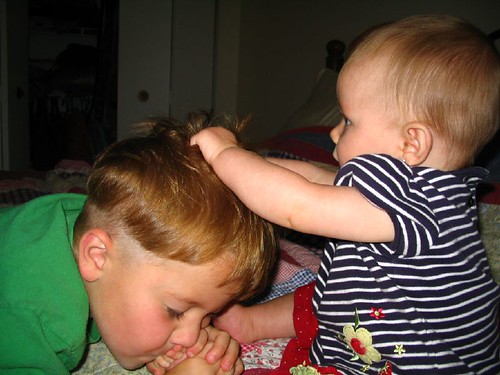
A kiss and a tug Sibling struggles and conflicts are normal and healthy and have the potential to bring children closer together, depending on how adults respond.

Begin by trying to envision yourself as a coach, as opposed to a referee. You want to trust the children and support them to find a way to work out and solve their own differences as much as possible, while you hold the space for them to do so by stepping in when needed to ensure their emotional and physical safety.

From my mailbox:

I am a Nanny, currently working with a family with two young children; Morgan, age five, and Evan, age two and a half. I have noticed many subtle and intense behaviors between them, and hopefully, you can give me some direction.
Here is a typical situation:

Evan picks up and plays with a toy that “used to” belong to Morgan, and Morgan will say, “Hey, that’s mine. I want it back”. Or, “Evan, can I have that/have it back?” Evan responds, “No, it’s mine”. Then, “No. It’s mine” back and forth, until Morgan takes the toy out of Evan’s hand, and 1) Evan cries, or 2) Morgan takes it from Evan’s hand, and Evan bites Morgan’s arm/head-butts Morgan, or 3) Evan runs away from Morgan, and starts a chase, then Evan throws the toy at Morgan (sometimes, Morgan dodges successfully, sometimes he fails).
Hitting and chasing usually happen when I am not in the same room with them. I might be in the kitchen cooking, or doing other housework. When I am in the same room with them,  I usually narrate, “Evan is playing with xxx, and Morgan wants it back”. They usually both look at me, and one of them says, “It’s mine” or “I want it” then I say, “You both want the same toy, how can you work it out so you both have fun?” That doesn’t seem to sink in since they usually continue the tug-of-war until the physical force starts. I then place my hand on the toy (if hitting has not occurred), and say, “How are you going to work this out?” This usually ends up with me putting the toy away after a few minutes of “But I want it/it’s mine/NO, it’s mine”. If Evan is about to hit or throw, I block Evan’s hand, and say, “I don’t want you to hit your brother”. He usually cries after I say that, or he sometimes attempts to hit me in the face, which I block while saying, “I know you are xxx, but I won’t let you hit.”

I say the toy “used to” belong to Morgan since he is the first born, and there are many many toys that were given to Morgan before Evan was born, and now those toys are in the playroom. The parents’ rule is if a toy is in the playroom, it belongs to everyone. Whoever gets it first, gets to play with it. When Morgan brings a toy given to him as a personal gift from his room to the playroom, I usually remind him that the rule is when a toy is brought to the playroom, everyone gets to play with it, and ask him if he is ready to share it with Evan. Sometimes he says yes, and sometimes, no. When he says no, I work through the scenario with him about handling his brother’s desire to play with his personal toy. This might sound like I am talking him out of it, but I can only handle so many conflicts a day. Sometimes, I just tell him straight out that I am not ready for another fight, and if he insists on bringing the toy to the playroom, he will need to find a way to share.

Another typical situation is they do things to each other knowing that by doing so, the grown-ups will react. Or when I am playing with Evan, Morgan interrupts by telling Evan what he should be doing, or correcting Evan’s play. When Evan ignores Morgan, he takes away what Evan is playing with, and there goes the pattern…

 My Response:

I’m also a nanny for a family who has two children with a similar difference in age between the children. The good news is this: the interactions you describe sound fairly typical and normal for siblings! The reason I say this is good news is that the boys are actually learning a lot about taking the viewpoint of another and being in a relationship with each other through their struggles, even though it might not appear so to us as adults! As their nanny, you are in an ideal position to support both children in their learning and growth by remaining neutral and being on the side of the boys’ developing relationship, as opposed to taking one side or the other when they argue or solving the dilemma of who gets the toy. Try to envision yourself as a coach, as opposed to a referee. You want to trust the boys and support them to find a way to work out and solve their own differences as much as possible, while you hold the space for them to do so by stepping in when needed to ensure their emotional and physical safety. I have to say, it sounds like you are doing a great job of this!

I  hold and express the expectation that the children I care for can and will work out solutions that they are happy with, and ones that don’t involve anyone getting hurt. I’d like to offer a few specific suggestions or thoughts for you to consider based on the scenarios you provided. Since you have noticed that the hitting and chasing usually happens when you’re not in the same room with the boys, this is an indication to me that they need the support of your presence and attention to help navigate their relationship in a more peaceful way, so I’d suggest some preventive measures :

1) If you know you have to be occupied in the kitchen or with housework, you can either involve the boys in the tasks at hand, keeping them in sight, or suggest they play separately for a bit. Perhaps you can keep Evan with you, or set up a simple art project in the kitchen if you’re working there, or maybe the boys can play in separate rooms independently for a bit? If not, I would say something to them along the lines of, “I am going to be working in the kitchen if you need me. I trust you to play safely together in the playroom.” Of course, I’d keep an ear out, and stop whatever I was doing to intervene if I heard a conflict escalating, but sometimes children can solve things better without an adult present!

2 ) The way you are mediating the disputes sounds almost perfect, but when one of the boys turns to you and says, “It’s mine. I had it first” or similar, I suggest calmly turning them back to each other: “I hear you saying you want the toy, but this is for the two of you to work out together. You can talk to your brother.” Stay with them for as long as it takes, and keep gently turning them back to each other, resisting the impulse to solve the problem for them. You might quietly remind them that the toys in the playroom are for everyone to play with, and empathize with the child who wants the toy but doesn’t have it, “It’s hard to wait for a turn when your brother has a toy you want to play with.” You might offer that it doesn’t appear that either boy is having very much fun and that maybe it would be more enjoyable for them to find a way to solve their disagreement. The struggle is not a bad thing though, as long as no one is getting physically hurt or physically overpowering another. The more at peace you can feel with the struggle, the more helpful it will be to them. So breathe!

3) It is perfectly acceptable for you to be honest with both boys about your limits. If there is a day when the conflict is constant, maybe everyone needs a break and some space, and as the adult, if you are feeling too tired, or just need a brief respite, by all means, be straightforward about this. You may choose to ask the boys to play separately, or to put away toys that are causing conflict. I might say something along the lines of, “Since it seems like you boys can’t decide how to play with this toy/game in a safe/gentle way, I’m going to ask you to put it away for today.” This language is neutral and isn’t “blaming” one boy or the other, and It moves the conversation away from who had the toy first, who it belongs to, whose fault it is that someone is upset. The arguments the boys are having aren’t really over the toys or ownership anyway. The real questions and the bigger issues underlying the struggle are these: How are the boys learning to be in a relationship with each other? How do they learn to negotiate alone and together time? How do they learn to communicate, co-operate, and get along with each other in a mutually beneficial and enjoyable way without violence, and how do they work through conflict in ways that leave everyone feeling heard and respected?

4) The rule about “special or personal toys” is actually a  good one, because it gives the boys some choice and power, and allows them to feel a sense of safety in knowing that certain things are their very own, and the boundaries will be respected. In the family I work with, each child has their own room, and this is their private space. They may play together and with each other’s special or personal toys in either room as long as the “owner’ of the room has invited the other in and they are both enjoying sharing the space and toys. They are both allowed to play in their rooms independently if they choose, and a closed door is respected, meaning no one enters without knocking.  With the two children I care for, It is harder for the three-year-old to understand when his big sister wants this quiet time, because he always wants to be near her and play with her, but I support her in setting the boundary; “I’d like to play by myself right now,” and help him to give her her space when she asks for it. “Your sister wants some time/space to herself, right now. She will join us later. How about finding something you’d like to do for a while?” Interestingly enough, the three-year-old has learned to enjoy this time to play with toys in the playroom that his sister sometimes monopolizes, and/or to enjoy some one on one time with me.  If Morgan wants to bring a special  toy to the family playroom and the family rule is that all toys in the playroom are fair game, I’d simply remind him of the rule, and if he says he doesn’t want anyone else to play with his toy, I’d respond, “That’s fine, but then I am going to ask you to keep the toy/play with the toy in your room.”

5) Your insight about the reactions the boys have learned to expect from adults is quite astute because children often do act in the way we teach them to through our modeling and responses to them. If they have learned that their disagreements get a lot of attention or big reactions from adults, or if they have learned to count on adults to step in and solve the problem for them, they will often oblige by continuing to act in ways they know will get results! When working with siblings I assume (as I do with all children) that each child is doing the best they can, given their current level of development and understanding, and I try to model the behavior I want them to emulate. So, if you’re playing a game with Evan, and Morgan comes along and interrupts, or tries to boss or correct his brother, I’d assume he wants to join the play, and  invite him to do by saying something along the lines of, “It sounds like you have a lot of good ideas for how to play. Would you like to join us?” If he joins, great! If he declines, I’d calmly ask him to refrain from “correcting” or interrupting his brother’s play. I often say, “Everyone has their own way of playing, and that’s Okay.”
I also like to help build the relationship between siblings by finding and setting up activities and games that they can both enjoy together, each at their own level. For instance, both the younger and the older boy can enjoy and contribute to games of block building, dance party, chase, hide and seek, scavenger hunts, sandbox play, water play, play dough, chalk art, painting murals, building forts, and obstacle course.
There are some card and board games that even the two and a half-year-old can play (if you’re on his team at first), like Zingo Bingo, I Spy, picture dominoes, Concentration, and Jenga.
I also read story books to both children together that touch on themes of family, friendship, and feelings. One of my favorites is When Sophie Gets Angry… Really Really Angry, by Molly Bang. I tell stories to the older child (within hearing distance of the younger child) about “When you were two years old…” or we look at their baby books and pictures together, and tell stories about what’s happening in the pictures. I feel like this validates both children and helps the older one to understand the younger one’s point of view, through a biographical narrative. I emphasize how much the older child has learned about being a good friend, and how much her brother is learning from watching her and listening to her.”If you grab toys from your brother, he learns that that is a good way to get a toy.” “When your brother hit you, it hurt and you cried.”
Sometimes, I will gently coach one or both of them…”What’s another way you could ask for a turn?” It sounds like you might both need to take a break to cool down.”  If they are both upset and yelling, I sometimes ask them to each take a turn to say what they want to, but again, I encourage them to talk to each other, and not to me, and I act like the sportscaster. I also acknowledge times when they are enjoying each other, playing peacefully, or when either one shows kindness to the other. 

I hope some of these thoughts and ideas are helpful to you. Try to remember when you’re in the thick of it that the struggle is what ultimately brings the two together, and just keep supporting them to build their relationship by letting them work it out between themselves as much as possible. The only way they can learn to negotiate conflict and to live together peacefully is by having ample opportunity to practice! There aren’t short cuts. We can’t will it or do it for them, as much as we’d like to at times. This is a gift you’re giving to them, and one that will serve them well in all of their relationships!


And just for your smile…

Olivia’s Rules Of Life  -Truths about little brothers (and sisters)!

#49. Little brothers always want the same thing you want.

#27. One good thing about little brothers: sometimes they get how funny you are.

#147. Most of the time, little brothers ask silly questions, and sometimes they ask really good ones.

Olivia


#52. If your mom is having a baby and she asks you whether you want a brother or a sister, that does not mean you’re really gonna get the kind you ask for.

#14. If you wake your baby brother up from a nap, sometimes he’ll get upset, and sometimes your mother will too.

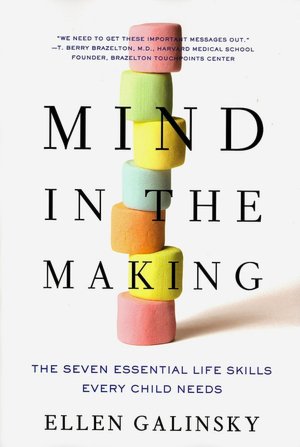
Mind In The Making: Seven Essential Life Skills Every Child Needs

What can we do to keep the fire in our children’s eyes burning brightly? How can families and teachers give children the life skills they need to cope in our multi-tasking, multimedia, modern world? These are the central questions Ellen Galinsky explores in the book, Mind In The Making: Seven Essential Life Skills Every Child Needs.


I had read Mind In The Making shortly after it was published in 2010, and was avidly following Amanda Morgan’s (Not Just Cute) series of “read along” posts delving deeply into the contents of the book, so I was thrilled to have the opportunity to meet Ellen during a recent talk she gave about the book. Ellen introduced Mind In The Making as an “accidental book”- one that took over ten years to write. She explained, “I didn’t set out to write a book. I started with the idea of doing a study on Youth and Learning. But- “In the course of interviewing young people (from many different backgrounds) for the study, I found far too many of them were turned off by learning, which is in stark contrast to very young children, who are driven to learn. I postponed the study on Youth & Learning and began a journey to answer the following questions: 1) How do children learn best? 2) What makes them stay motivated and engaged in learning? 3) What makes them see themselves as learners, and how do they become ongoing, life-long learners? 4) What can be done to rekindle their motivation if it has been dulled?”

Ellen then decided to make a documentary exploring the best science on children’s learning. But, after a few months of interviewing researchers and working with a production company to film experiments, the documentary grew to become a series. Four to five years later, after examining research across many disciplines, Ellen said she began to see a certain set of skills that emerge in all children who are motivated, engaged learners. She could also see, from looking at longitudinal research, that if parents and teachers promoted these skills, it made a critical difference, and helped children to thrive throughout their lives, which is why she defined the seven skills she identified as life skills. She quipped, “Everyone does something. Some people kayak, and others climb mountains for adventure. I follow research and call it adventure.” My kind of lady!

Ellen Galinsky

All seven of the skills Ellen identified involve what scientists call executive functions of the brain. (Executive functions all involve the prefrontal cortex of the brain, and we use them to manage our attention, our emotions, and our behavior in order to reach our goals. They aren’t just intellectual skills (what we typically think of as IQ), but also encompass social and emotional capacities, and “go beyond what we know, to tap into how we use what we know.” The seven life skills are as follows:

  • Focus and Self Control
  • Perspective Taking
  • Communicating
  • Making Connections
  • Critical Thinking
  • Taking On Challenges
  • Self Directed, Engaged Learning

Ellen went on to explain that she wanted to write a book that would bring the research alive in an interesting and engaging way, and not guilt parents, but instead, be hopeful and help them to see how they could nurture their children’s development of  these seven life skills through everyday interactions and activities. I’d say she succeeded brilliantly in her goal.

She stressed that these skills are as important for adults as they are for children, and that when we practice them ourselves (modeling), we help promote them in children. “We don’t need expensive programs, materials, or equipment to promote these skills- they can be promoted through the everyday things we do with children, and it’s never too late to help children learn these skills- no matter what their age.” During her talk she used video clips to introduce various researchers and bring the research alive, by bringing us into the lab to watch experiments in action, and in the book, she shares numerous examples that translate the research into “real life” situations. She provides a parent’s perspective, and shares some of her own experiences and lessons she learned from parenting her two (now grown) children. She also offers short experiential exercises for adults, and many suggestions for enjoyable and easy ways for parents and teachers to encourage and support children in developing the seven life skills- through the conversations we have, the games we play, the routines and rituals we develop, and even through the difficulties and disagreements that naturally occur between siblings or between parents and children. (Sibling relationships provide fertile ground for helping children to develop their skills in perspective taking or “understanding the other”, communication, and problem solving!)

There was a group of early childhood educators seated behind me in the auditorium, and I had to grin when one of them couldn’t contain an enthusiastic, “Uh huh! What took them so long to figure that out?”,  as Ellen underscored the point that young children learn and solidify focus and self control through active movement of their bodies. What is often very obvious and “known”  to those of us who care for, teach, and observe young children on a daily basis is just now being studied, understood, and quantified by researchers.

What was exciting to me as I was reading the book and listening to Ellen speak, is what the researchers are now discovering about babies and toddlers and how they learn. Most people don’t think to pair the word “competent” with  infants, yet, they are competent to begin participating in relationship and learning from their first moments, and the research provides some striking examples of ways we can support even the youngest and most fragile of babies to begin to develop the skills they will need and use for life. I am especially interested in making connections between the current research and my practice of Magda Gerber’s philosophy of educaring (educaring = teaching  while caring).


premature baby
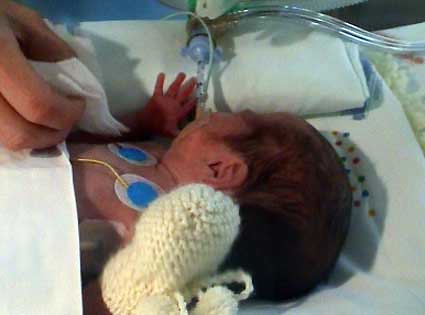
Particularly fascinating to me, and what I want to highlight in this post and the next, is Heidelise Als’s (of Harvard University) research with preterm infants (born ten to twelve weeks before their due date) in neonatal intensive care units. Als’s work points to the tremendous competence and resilience even the most fragile baby is born with. Ellen shares in her book that her son Philip was born premature, so Als’s research was of particular interest to her, as well. Ellen believes Als’s work has important implications for all children, because it is instructive in how we can work with children to help them to thrive and cope in the face of challenges, becoming stronger in the process.

This short video clip provides a brief interview with Als, highlights how her ideas are benefiting some premature infants, and suggests why her findings might be helpful to all of us interested in helping children to develop their inborn abilities  to take on challenges and cope with stress. I invite you to take a moment to watch.

In my next post, I will share more about Als’s discoveries and approach, which she describes as a developmental, relationship based, respectful way to support even the youngest infants to manage their own stress, by encouraging them “to use the abilities that they are born with for coping and calming down.”

I’ll leave you with this quote from Als, which is where I begin my next post….

“If we can understand the ‘words’ the baby is saying, maybe we can fill in the meaning of the sentence and understand the message.”